Dietary fats, oils and cholesterol. You need a small amount of fat in your diet for healthy functioning. Oils and fats supply calories and essential fats and help your body absorb fat-soluble vitamins such as A, D, E and K. The type of fat is just as important for health as the total amount of fat consumed.
The name is a little misleading, as vegetable oil doesn’t always come from vegetables. It is extracted from different types of fruits, seeds, grains, and nuts. Vegetable oil comes in many varieties for many cooking purposes.
• Canola • Corn • Olive • Peanut • Safflower • Soybean • Sunflower.
Even the healthiest oils should be used in moderation since they are high in calories and primarily fat. When cooking with vegetable oils, consider the different types of fat.
Some oils, like olive oil, are simple to make. Olives only need to be crushed, and the resulting oil is filtered and ready for use. Other oils have more complicated processes. Plants, nuts, and seeds are crushed to produce their oil, which sometimes requires a chemical for complete extraction. The leftover solids are used for feeding animals and livestock.
Refining: Next, the oil gets treated with phosphoric acid, separating any gums from the oil. The oil also has to be treated with caustic soda, which removes free fatty acids that could give oil a soapy consistency.
Bleaching: After refinement, oil is heated and mixed with filter aids that serve to absorb any colors and impurities in the oil. These add-ins are removed after they've done their job.
Deodorizing: Finally, oil is heated to 480 degrees F. beneath a vacuum. This process produces steam bubbles that remove any remaining free fatty acids and impurities. Once deodorizing is complete, the oil is ready to be packaged and used in your kitchen.
Your body needs fats to function, but they should be consumed in moderation. Small amounts are sufficient. Foods that are high in saturated and trans fats may progress health conditions like autoimmune diseases, cancer, and heart disease. These fats also lead to insulin resistance, and potentially diabetes.
Oil contains nine calories per gram, while proteins and carbohydrates have four calories per gram. Even healthier oils like avocado and olive oil are still fats. Your fat intake should represent no more than 25%-35% of your calories each day. Also, keep in mind that foods processed to be lower in fat often have added sugar and salt for flavor. These may not be ideal swaps.
There’s no doubt that certain oils can contribute positively to your health. Olive oil may lower LDL bad cholesterol while also raising HDL good cholesterol levels. Olive oil also has other great nutrients like beta carotene and vitamins A, E, D, and K.
If you tend to use oil for deep- frying, your food absorbs more oil. Instead, try sautéing with a lesser amount of oil. Over time, the high heat from frying also promotes free radicals that may increase your risk for skin cancer.
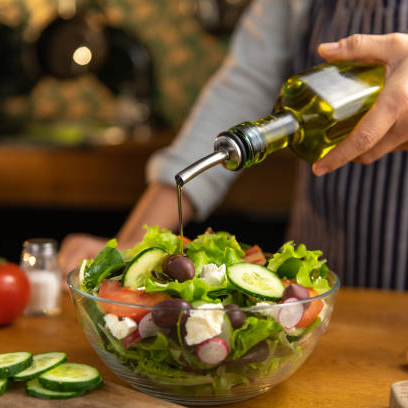
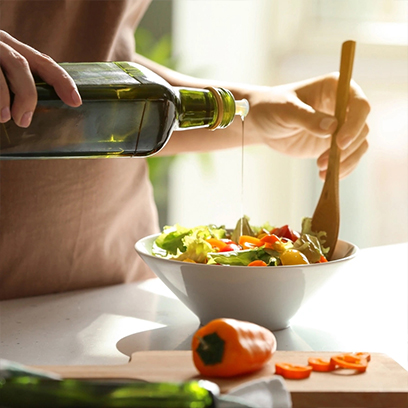
Remember that all oils safe for use at very high cooking temperatures should be consumed in limited quantities. Vegetable oil uses extend past the stove and oven, and can be enjoyed in things like dressings.